Grow a Herbal Tea Garden
Whether you’re new to gardening, or have been gardening for as long as you can remember, creating themed garden beds is one of the most joyful and practical ways to garden. Instead of randomly planting crops that you’re not even sure if you love that much, designing around a theme gives your garden direction and intention. Not only does it help with planning, but it also improves companion planting success, and makes harvesting feel more rewarding & useful. If you are someone who enjoys a warm cup of tea on a regularly basis, creating a herbal tea garden bed theme is for you! Let’s talk about how to do that, and what you need to plant.
Growing a herbal tea garden is a relatively low‑maintenance garden, and can be customized depending on what you enjoy. I always love to encourage people to grow what they like to eat, so if something isn’t jumping out at you on this list, skip it! Avoid overcrowding, as airflow is essential to prevent mildew.
What to Plant in a Herbal Tea Garden
1. Chamomile
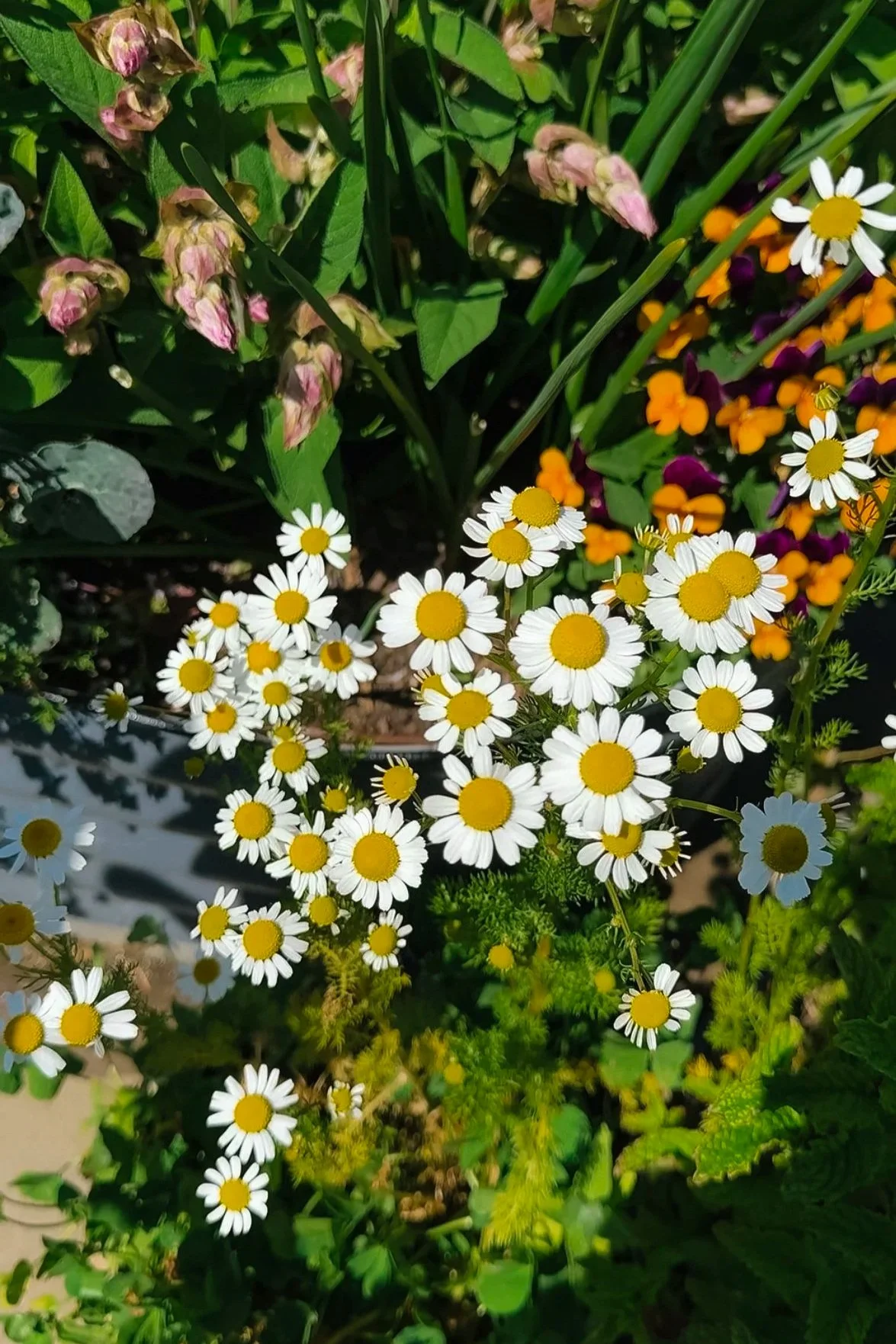
Chamomile (Roman variety) is a perennial, and is typically a fast grower. To encourage new growth, trim the stem after the first harvest. Chamomile doesn’t need to be regularly cut back year-to-year, making it an easy addition to a tea garden!
Health Benefits
Chamomile is a popular tea ingredient, and has many health benefits. Those include: promoting relaxation and better sleep, calming anxiety and aiding digestion.
Common Uses
Other uses include: in bedtime and stress-relief teas, as a digestive soothers after meals, and as a gentle remedy for kids and sensitive stomachs. It is important to note that you should avoid chamomile if you are allergic to plants in the daisy family (ragweed, asters).
2. Lemon Balm
Similar to chamomile, lemon balm is also a perennial and often grows quite quickly. It can be quite an aggressive spreader in a garden, so it’s best to grow in a pot or near the edge of the bed. It’s encouraged to prune multiple times throughout the season so it will bounce back with ease the following year.
Health Benefits
There are many health benefits to lemon balm, including: calming your nervous system, supporting healthy sleep, aiding digestion + relief of bloating, antiviral properties and support for mental clarity.
Common Uses
Some other common uses for lemon balm include: as an ingredient in uplifting teas, stress & anxiety blends, as well as digestive tea blends.
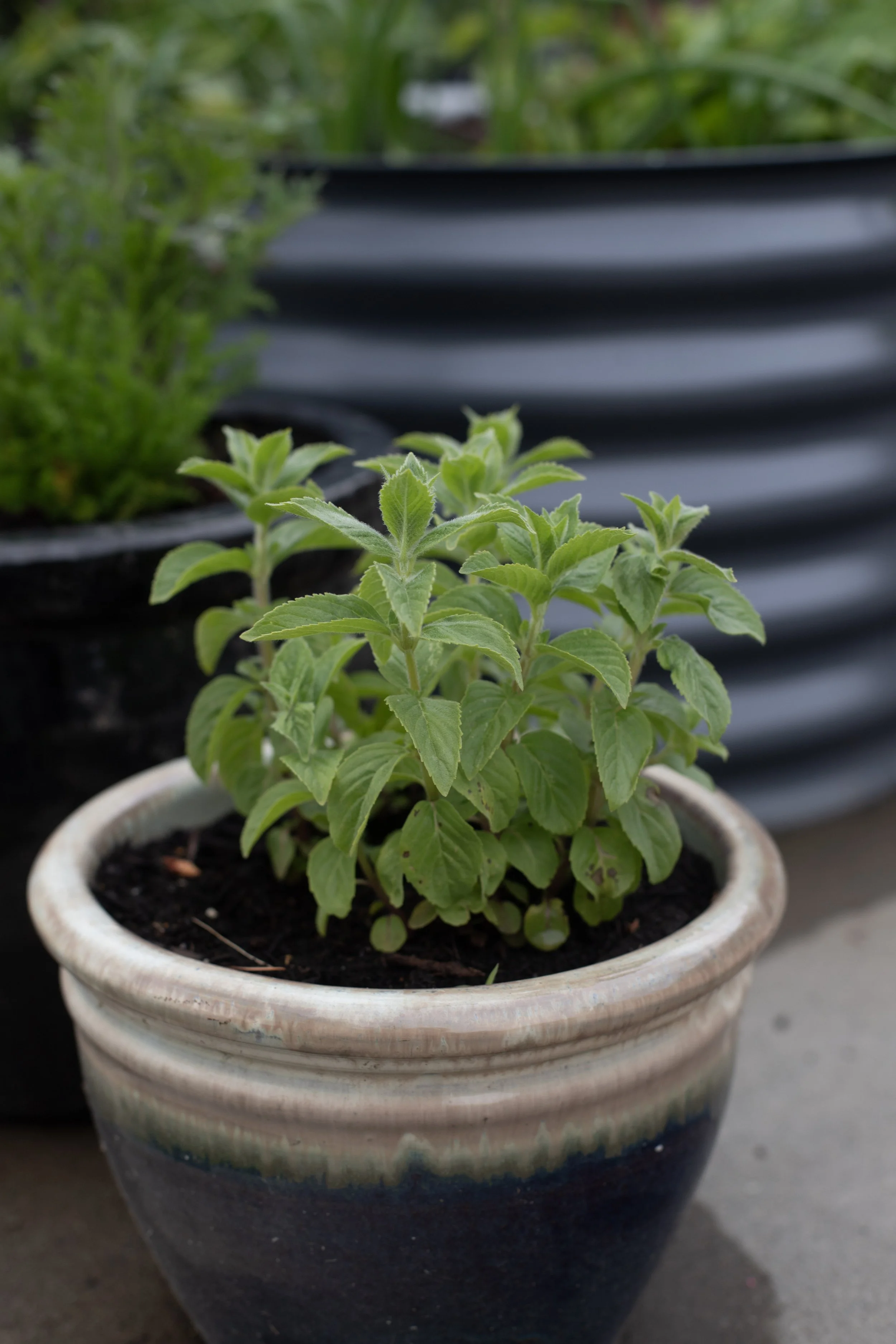
3. Mint (in it’s own container!)
Another fast-growing perennial is mint! It’s a fantastic addition to a herbal tea garden, but must be in it’s own container as it will take over the bed. Each year, trim your mint plant back to the ground in the fall, and mulch with compost.
Health Benefits
Some health benefits include: Aiding in digestion, relieving headaches, supporting respiratory health and can provide a mild energy boost.
Common Uses
Common uses for mint include: fresh or dried herbal teas (including for when you’re sick), and stomach-settling properties.
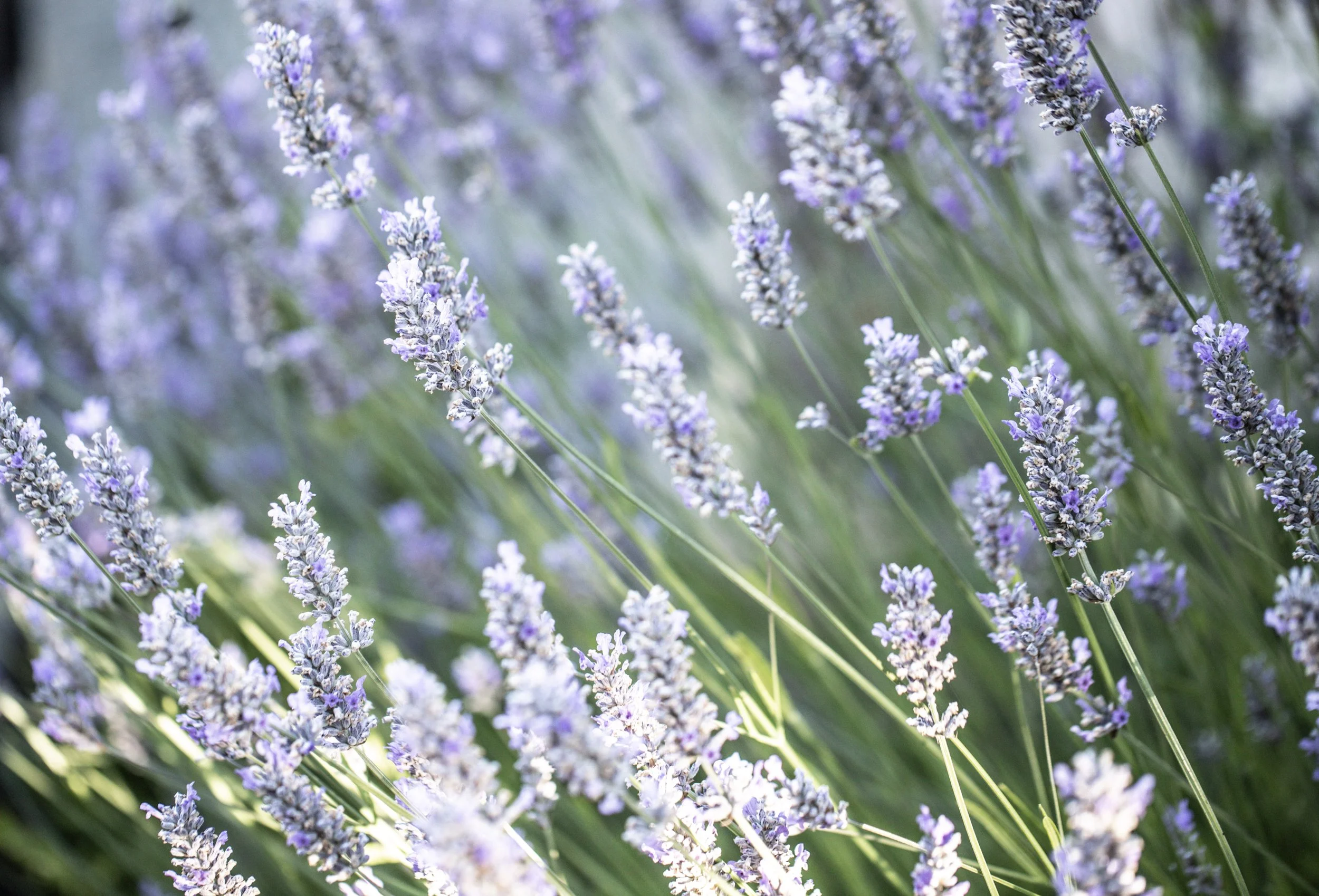
4. Lavender
Lavender is also a perennial, however it’s a slow-growing shrub, and can take up to 3 years to become a fully mature plant. If you want to start harvesting this summer, purchase an established starter plant from a local nursery. Trimming back your lavender once a year will aid in new, healthy growth.
Health Benefits
Some health benefits of lavender include: better sleep, reducing anxiety and stress, easing headaches and digestive support.
Common Uses
Common uses for lavender include: ingredient in calming tea blends (Blend with mint or lemon balm), and aromatherapy. Note: Lavender has a strong flavour – use sparingly in tea.
5. Bee Balm
Lots of perennials in this tea garden, and it continues with bee balm! This herb will grow quickly, and can reach heights of up to 4 feet. After a hard frost in your grow zone, trim back the bee balm to the ground.
Health Benefits
Bee balm’s various health benefits include: antibacterial and antiviral properties, support in immune health (including when sick with a cold or flu), and aiding digestion.
Common Uses
Other common uses include: “Oswego tea” for respiratory illnesses, immune-boosting herbal blends and steam inhalation for congestion. Plus, bee balm is a great plant to grow to attract pollinators!
6. Thyme
Thyme is a shrubby perennial, and while it can take some time to sprout, you can see rapid growth in one season. It’s a relatively easy to care for plant, that will need some regular light pruning after it’s first year in your garden.
Health Benefits
Thyme has a variety of health benefits including: being antimicrobial and antiseptic, supporting lung and respiratory health, soothing coughs and aiding in digestion.
Common Uses
Some other common uses include: medicinal teas for colds, and infused honey/steam therapy. Thyme is very strong, so small amounts go a long way.
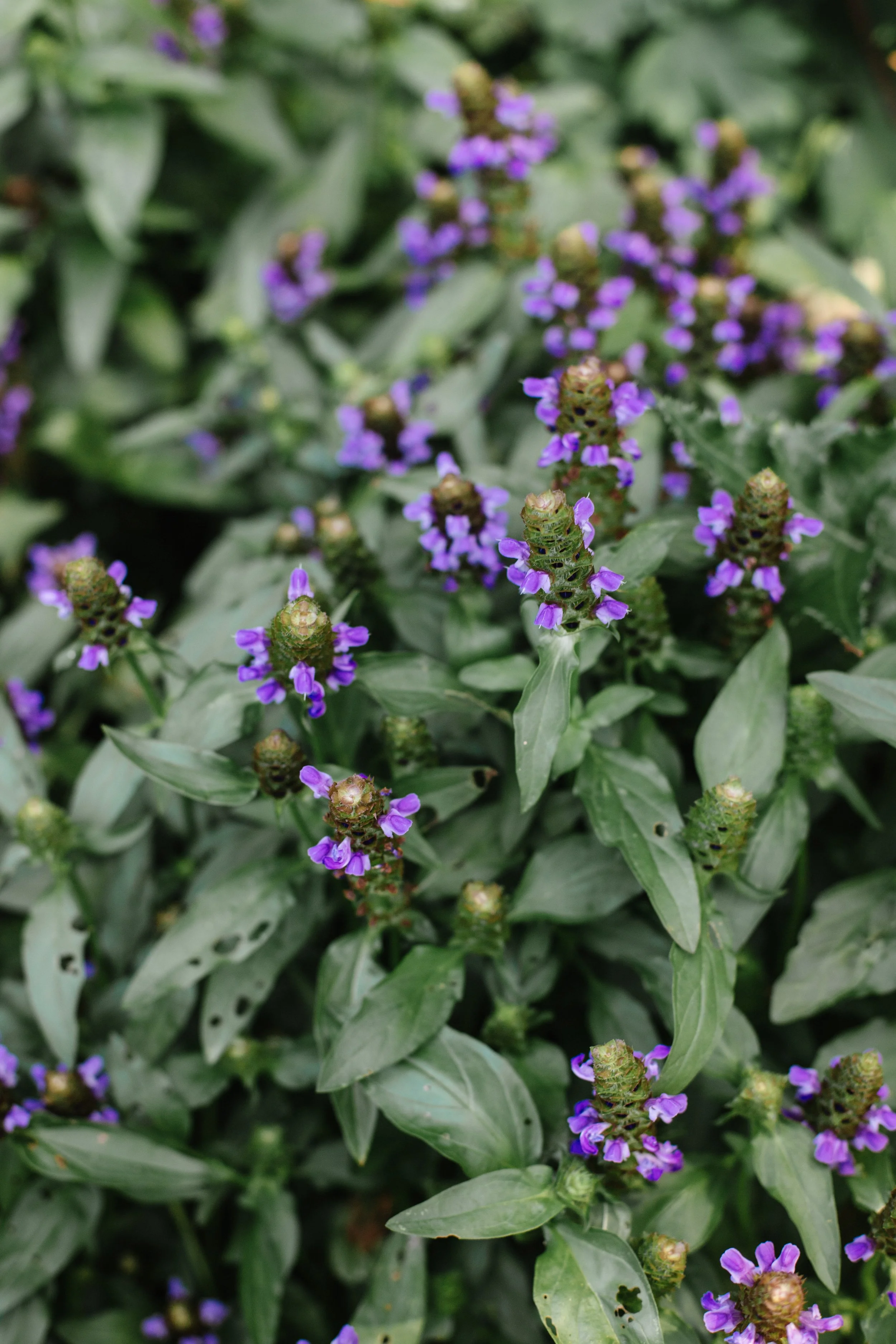
7. Self Heal
Self heal is interesting in that it is a perennial weed! Yes, weed. It can grow to be up to 18 inches tall, and is actually in the same family as mint, so keep an eye on this plant to ensure it won’t take over your garden bed. Ideally, it can be in it’s own pot.
Health Benefits
Self Heal has lots of health benefits (the name gives it away!), some of those include: for use in traditional wound healing, it is anti-inflammatory and an antioxidant, support your immune and lymphatic systems & can help soothe sore throats.
Common Uses
Some other common uses are: in healing tea blends, salves and immune-support blends. It is often called “heal-all” in herbal medicine.
8. Pineapple Sage
Another fast-growing perennial shrub is pineapple sage. It can grow to be up to 5 feet tall, and is a relatively easy going plant. However, they are sensitive to a hard frost, so it’s suggested to cut back to the ground each winter and mulch for it to return the following year. The best part about pineapple sage is that you can use both the leaves & flowers in your herbal tea mixtures!
Health Benefits
Pineapple sage tastes amazing, but it also has health benefits too! Those include: mood-boosting, supporting digestion, stress and anxiety relief and mild antimicrobial properties.
Common Uses
Other uses include: as an ingredient in fruity teas, uplifting teas (blended with mint or lavender) and even in cold & flu teas. Pineapple sage also attracts hummingbirds!
Companion Planting Tips
Most tea herbs grow well together, meaning you don’t need to worry too much about whether they’re okay to plant together, however it’s important to note that thyme and lavender prefer drier soil, so plant them toward the edge of the bed is ideal. Additionally, mint should always be planted in it’s own pot as it will quickly take over a bed & all other plants in the bed with it.
Some other benefits from growing a herbal tea garden include that many of these crops attract pollinators, support your overall wellness and encourage a sustainable lifestyle while having minimal upkeep. They are also perfect for drying herbs for year‑round use!
Planting Timeline
If you’re also based in zone 9 like I am here in Victoria, follow this general planting timeline for your herbal tea bed:
January-February: Start perennial herb seeds indoors
March–April: Direct sow chamomile
April–May: Transplant perennial herbs into the outdoor bed
Hang Drying Method
When it comes time to harvest from your tea garden, follow these quick steps for a simple and effective hang drying method!:
When your herbs are ready, harvest clumps from your garden so you have enough to make a tea with.
Tie together with some twine, and hang upside down for 2-3 weeks in a well ventilated, dry room.
Once your herbs are sufficiently dried, you can make your own custom tea bundles!
Tea Blending Ideas
If you’re looking for some tea blending ideas for when you’re done harvesting and drying your herbs and flowers, here are some of my favourites!:
For Relaxation: Lavender, pineapple sage & mint
For Cold & Flu: Bee balm, thyme & mint or bee balm, thyme & chamomile
For Digestive Aid: Mint, thyme & pineapple sage or mint, chamomile & lemon balm
For Sleep & Calmness: Chamomile, lavender & lemon balm
For Stress Relief: Lemon balm, pineapple sage & min
Growing the perfectly themed bed for your lifestyle is proven to provide success for many people in the garden – it simplify planning, makes for easy companion planting, and creates a garden that feels purposeful, joyful and useful.

* Note: Some links featured in the above post are commissionable/affiliate links.